After a car accident, you quickly learn that medical bills and repair estimates only tell part of the story. The hardest parts of recovery often cannot be added up on a spreadsheet. You may be left with ongoing pain, emotional stress, anxiety, and a strong sense of grief for the life you once knew. In Nevada auto accident cases, these human impacts fall under what the law calls “pain and suffering.”
If you are trying to understand what your case may be worth, pain and suffering often feels like the most confusing part of the process. There is no price tag on discomfort, fear, or lost enjoyment of life. Courts and insurers rely on judgment, evidence, and experience to assign value. In this blog, our Las Vegas auto accident injury lawyers will help you understand the calculations behind pain and suffering damages.

What “Pain and Suffering” Means Under Nevada Law
In Nevada, pain and suffering refers to non-economic damages. These include physical pain, emotional distress, mental anguish, and the ways your injuries limit your ability to enjoy daily life. Unlike medical expenses or lost wages, these damages do not come with invoices or pay stubs.
You may experience pain and suffering in many forms. Physical pain can linger long after a physical injury heals. Emotional distress may show up as anxiety, depression, sleep problems, or fear of driving. Loss of enjoyment can mean giving up hobbies, struggling with family responsibilities, or feeling disconnected from the life you had before the crash.
Nevada law allows you to recover these damages after a wreck, and there is no general cap on pain and suffering for standard car crashes. That flexibility gives juries and insurers room to evaluate each case individually.
How Insurance Companies Calculate Pain and Suffering
Insurance companies often rely on informal formulas to estimate pain and suffering. These methods are not written into Nevada law, but they are commonly used during settlement negotiations. The goal for insurers is consistency and cost control, not necessarily fairness.
One common approach is the multiplier method. Insurers start with your economic damages, such as medical bills and lost wages, and multiply that number by a factor. The multiplier usually ranges from 1.5 to 5, depending on factors like injury severity, length of recovery, and whether the injury caused lasting limitations. A more serious or permanent injury typically justifies a higher multiplier.
Another approach is the per diem method. This assigns a daily dollar amount to your pain and suffering and multiplies it by the number of days you experience symptoms. For example, an insurer might argue that your pain is worth a set amount per day until you reach maximum medical improvement. One challenge with this method is that it often undervalues long-term or intermittent pain.
These formulas give insurers a starting point, but they are not final. They can be challenged with strong evidence and clear explanations of how your injuries affect your life.
How Courts and Juries Evaluate Pain and Suffering
If you cannot reach a settlement with insurers, you may advance your case to a trial. Courts in Nevada do not use strict formulas to calculate pain and suffering. Instead, judges and juries are instructed to award an amount they believe is fair and reasonable based on the evidence presented. This approach focuses more on your lived experience than on math.
Testimony plays a major role. Your own description of pain, limitations, and emotional effects helps jurors understand what you are going through. Medical records provide support by showing diagnoses, treatment plans, and recovery timelines. Testimony from doctors, therapists, or family members can add context to how your injuries changed your daily life.
What Increases or Decreases Pain and Suffering Awards?
Several factors influence how pain and suffering is valued in Nevada auto cases. Severity and duration of injury are among the most important. A short-term soft tissue injury may be valued lower than a spinal injury or traumatic brain injury that affects you for years.
Permanence also matters. Scarring, chronic pain, and long-term disability often increase awards because they represent lasting changes to your life. Emotional and psychological effects, such as post-traumatic stress or depression, also play a role when properly documented.
Another key factor is the quality of evidence. Clear medical records, consistent treatment, and detailed descriptions of daily limitations strengthen your claim. Gaps in treatment or vague documentation can reduce perceived value, even if your pain is real.
How Comparative Negligence Affects Pain and Suffering in Nevada
Nevada follows a comparative negligence system under NRS 41.141. This means your compensation can be reduced if you are found partially at fault for the accident. If you are 50% percent or less at fault, you are eligible for damages, but your award will be decreased by your share of responsibility. That means if you are 40% at fault, your $100,000 payout will be reduced to $60,000. If you are more than 50% at fault, you will not receive any compensation.
Pain and suffering is treated the same as other damages under this rule. If a jury awards a certain amount for pain and suffering but finds you partially at fault, that amount is reduced accordingly. This is why insurers may shift blame onto you. Reducing fault reduces their exposure, even when injuries are serious.
How Insurers Undervalue Pain and Suffering
Insurance companies tend to undervalue pain and suffering because it is subjective and difficult to measure. They may argue that your symptoms are exaggerated or temporary. This is why careful documentation matters. Pain journals, therapy records, and consistent medical visits help show the ongoing nature of your suffering and counter attempts to minimize it.
Insurers also rely on the fact that many people underestimate the long-term impact of injuries. They may offer you an early settlement in the hopes that you’ll accept quickly before the full scope of your pain and losses becomes clear. Once a case is settled, you usually cannot reopen it, even if symptoms worsen.
How to Strengthen Your Pain and Suffering Claim
You can influence your claim by taking the following steps:
Communicate with your doctors. Tell your doctors how pain affects your sleep, work, and daily activities. This gives context beyond a simple pain scale. Don’t whitewash your suffering. Be honest and specific.
Keep a journal. Write down flare-ups, emotional struggles, and missed activities. This creates a record that supports your claim.
Gather witness statements. Have family members, friends, or co-workers write letters that illustrate how your injuries have changed your behavior and abilities.
Organize documentation. Start a file of documents (either physical or digital) that supports your pain and suffering claims. These documents may include receipts and records for both physical and mental health care.
Talk to a lawyer. You may be new to pain and suffering claims, but a good attorney will have represented many people with claims similar to yours. They know cases are won based on evidence and can help you compile the most compelling evidence to support your claim. Search for an “accident attorney near me” and check ratings, testimonials, and depth of experience to make sure you get the best representation.
Your Suffering Matters
Pain and suffering damages exist because injuries affect more than finances. Nevada law recognizes that physical pain, emotional distress, and lost enjoyment of life deserve acknowledgment. Courts and insurers approach these damages differently, but both rely on evidence and credibility.
With careful documentation, consistent treatment, and clear explanations, you can paint a full picture of the toll your injury accident has taken on your life. You can get the justice that you deserve.
Video

Infographic
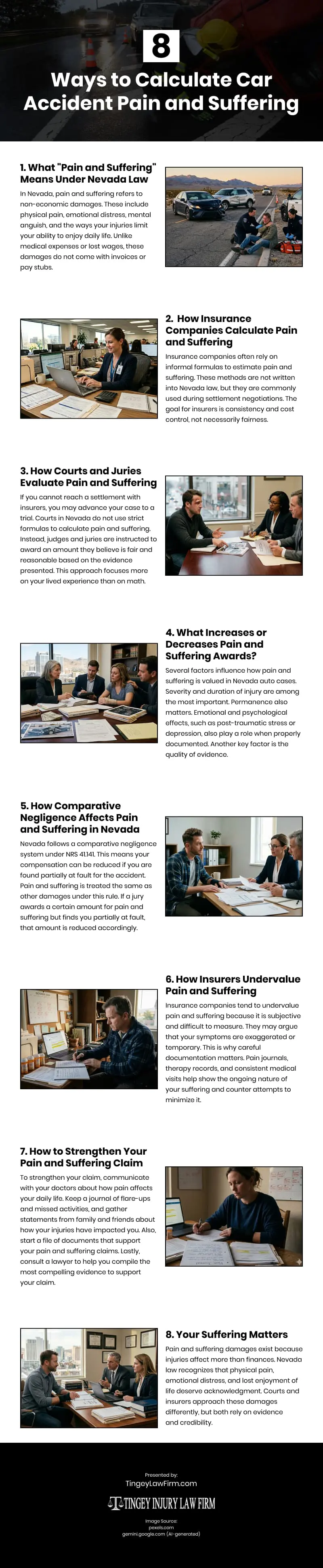
After a car accident, the cost of recovery often goes far beyond medical bills and vehicle repairs. In Nevada, these harder‑to‑measure losses are known as pain and suffering. This infographic explains what they include and how they’re calculated.