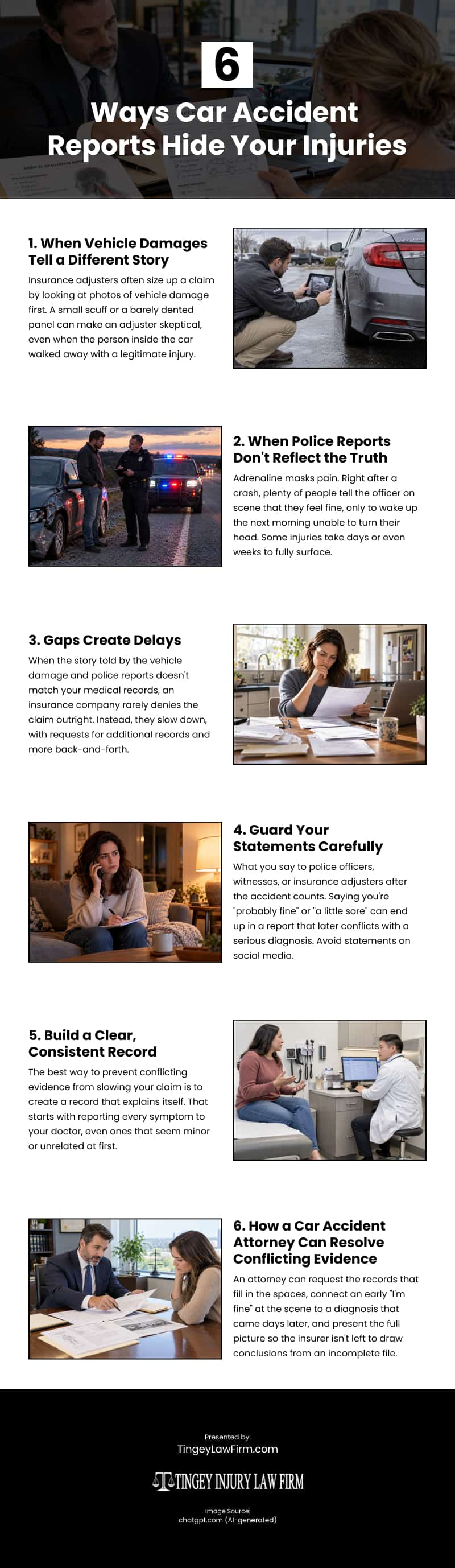
Your car crash is reported as a minor fender bender, but you still end up with a herniated disc. Or maybe your crash was more significant, but the police report says you looked fine after the wreck. Days later, imaging shows you sustained a traumatic brain injury.
Sometimes the evidence doesn’t support the real story, and insurance companies pay attention. Gaps like this can create opportunities for insurers to question your personal injury claim and pay out less in damages.

When Vehicle Damages Tell a Different Story
Insurance adjusters often size up a claim by looking at photos of vehicle damage first. A crumpled bumper suggests a serious injury is plausible. A small scuff or a barely dented panel can make an adjuster skeptical, even when the person inside the car walked away with a legitimate injury.
The physics don’t always work the way people expect. For example, a low-speed impact can still jolt your spine or neck enough to cause an injury like whiplash or a herniated disc (when the cushioning between spinal bones pushes out of place). This is especially likely if you were braced for impact or hit at an odd angle. None of that shows up in a photo of the bumper.
When Police Reports Don’t Reflect the Truth
Adrenaline masks pain. Right after a crash, plenty of people tell the officer on scene that they feel fine, only to wake up the next morning unable to turn their head or get out of bed without pain radiating down a leg. That gap between the police report and the eventual diagnosis becomes something the insurance company has to reconcile.
Some injuries take days or even weeks to fully surface. Disc injuries and soft tissue damage often follow this pattern, with symptoms building gradually instead of appearing all at once. A short delay between the accident and your first real symptoms is common, but it can look like a red flag if nobody explains it in your medical record.
This isn’t limited to physical symptoms. Concussions can cause cognitive and emotional symptoms like brain fog, poor focus, depression, or irritability. These symptoms may not manifest until you try to go back to normal life days after the crash. By then, the police report already says you seemed fine, and the disparity between that report and the eventual diagnosis is exactly what an adjuster will flag.
Gaps Create Delays
When the story told by the vehicle damage and police reports doesn’t match the story told by your medical records, an insurance company rarely denies the claim outright. Instead, they slow down. You can expect requests for additional records, a possible independent medical examination, and more back-and-forth before the insurer agrees to a fair number.
This doesn’t mean your case is weak. It means the insurance company needs a clearer picture before they’ll commit to a number, and building that picture takes time.
Unfortunately, insurers can use the gap between accident scene evidence and actual damages to minimize your payout. They may argue that your injuries are pre-existing or that they are not as bad as you claim.
If you can close the gap early, you can minimize the risk of insurers questioning evidence and decreasing your payout.
Guard Your Statements Carefully
What you say to police officers, witnesses, or insurance adjusters after the accident counts. It’s common to downplay symptoms out of instinct, especially in the first conversation with a police officer or the other driver. Saying you’re “probably fine” or “a little sore” can end up in a report that later conflicts with a serious diagnosis. Avoid saying anything that could minimize your case, whether at the accident scene or later in a recorded statement with an insurance adjuster. (It’s a good policy to involve an accident injury attorney before you give a recorded statement.)
You should also avoid making statements on social media. Insurance companies often hire investigators to track your social media accounts and use your statements against you. It’s best to take a break from social media until your case is resolved and request that your friends and family avoid posting about you or sharing photos of you. The last thing you need is a picture on the internet portraying you as physically active while you claim to be badly injured.
Build a Clear, Consistent Record
The best way to prevent conflicting evidence from slowing your claim is to create a record that explains itself. That starts with reporting every symptom to your doctor, even ones that seem minor or unrelated at first.
A consistent record usually includes:
- Prompt medical treatment, ideally within a few days of the accident
- A complete description of every symptom at each appointment, not just the most severe one
- Follow through on every referral, from physical therapy to specialist visits
- A personal journal, documenting when each symptom appeared, how it changed, and how it affects your personal and professional life from day to day
When there’s a lapse in your record, whether from a missed appointment or a symptom you didn’t mention until weeks later, it opens a window for insurers to minimize or deny your payout. A consistent record closes those spaces before an adjuster has a reason to open them.
How a Car Accident Attorney Can Resolve Conflicting Evidence
When the consequences of your wreck are worse than your vehicle damages or the police report shows, it’s probably time to search for a “car wreck lawyer near me.” An attorney can request the records that fill in the spaces, connect an early “I’m fine” at the scene to a diagnosis that came days later, and present the full picture to the insurance company. That way, the insurer isn’t left to draw their own conclusions from an incomplete file.
Video

Infographic