You just got home from a Las Vegas business trip and decide to take an Uber to your home in Summerlin. On the way home, your driver collides with another vehicle. You are shocked and frustrated. This was supposed to be a short, safe drive home, and here you are waiting for the police to arrive as you check yourself for injuries.
You don’t see any visible injuries, so you tell the police you are fine, call a friend to pick you up, and head for home, glad to have the whole thing behind you.
But the next day, you notice pain in your neck and back and suspect it is related to the crash the day before. Now what?

Why Even Minor Crashes Still Matter
Some crashes can seem like no big deal, especially if you were hit at a low speed, the vehicle damages are mild, and the other people involved seem fine.
You may be fine, too, but there’s also the possibility that you’re hurt, and adrenaline is masking the pain. Or that you have sustained injuries that will develop gradually. These gradual injuries may include whiplash, ligament strains, and concussions, which often show up hours or days after a car crash.
You may notice neck stiffness the next morning. A headache may build later in the day. Dizziness, back pain, or shoulder pain can show up after you have already returned to work, gone home, or tried to resume your routine.
You may be tempted to go about your business and hope the injuries will go away on their own. But insurance companies often look at timing. If you wait several days to seek care or report the incident, they may argue that the crash was too minor to cause real harm and that your injury came from something else (like a pre-existing condition).
Why People Put Off Reporting Rideshare Accidents
When people declare that they are fine at the accident scene but then develop an injury a couple of days later, they may feel it is too late to report the injury.
Or they may simply be too busy. Dealing with insurance companies takes time, and insurers can sometimes be uncooperative. That can scare some people away.
Some people may not know where to begin. Rideshare accidents involve multiple players: the rideshare driver, the driver of the other car, and the rideshare company. Each of these players may tell you to talk to the other, leaving you confused about who to file a claim with. This uncertainty can make inaction feel easier than starting the process.
But a delay rarely makes the situation simpler. Rather, it gives you less evidence to rely on and gives the insurer more room to discredit your claim.
What You Should Do After The Crash
If you’re injured as an Uber passenger, you do not need to panic or turn a manageable situation into chaos. However, you do need to take a few practical steps while the details are still fresh. Here’s what our Las Vegas accident injury lawyers recommend:
•Start With Documentation
If you can do so safely:
- Take screenshots of your ride information in the app
- Get the driver’s name, vehicle details, and insurance information
- Report the accident in the “Trip and Fare Review” section of the app
- Take photos or videos of the vehicles, license plates, and accident scene
- Save any communication connected to the trip or accident
•Report
Make sure the drivers call a police officer to the scene to create an accident report. You should also report the accident to your own insurance provider.
•Pay Attention To Your Body
Even if the pain seems mild, monitor how you feel over the next several hours and days. Neck stiffness, headaches, back pain, nausea, confusion, and numbness deserve attention. If symptoms appear, seek medical care promptly and explain that you were in an Uber or Lyft accident.
Insurance adjusters may come back to you later with all kinds of questions: When did you first feel pain? When did you report the crash? Why did you wait to see a doctor? How do you know this injury came from the rideshare accident?
When you follow the steps above, you can back your answers with strong evidence.
The Benefits of Reporting the Collision Early
A rideshare crash can involve multiple insurance layers. The driver’s personal policy, the rideshare company’s coverage, and another driver’s insurer may all be part of the picture. That structure can make even a minor crash harder to sort out than a standard two-car collision.
When you report early, you nail down evidence in the app record. And that record of things like driver status, time of trip, and accident details can all affect which coverage applies. If you wait too long, you risk losing clarity on those facts or giving insurers more room to dispute responsibility.
Take The Small Steps Before The Stress Grows
You do not need to handle everything at once, but you do need to avoid doing nothing. A rideshare crash that feels minor can still affect your health and your ability to recover compensation for things like medical bills and lost wages.
Start with the basics. Report the accident. Save the trip details. Watch for delayed symptoms. Get medical care if anything feels off. If you are encountering insurance resistance, search for a “car wreck lawyer near me” who can advocate for your rights.
These steps protect you without adding unnecessary pressure, and they can prevent a lack of action today from becoming a decisive problem later.
Video
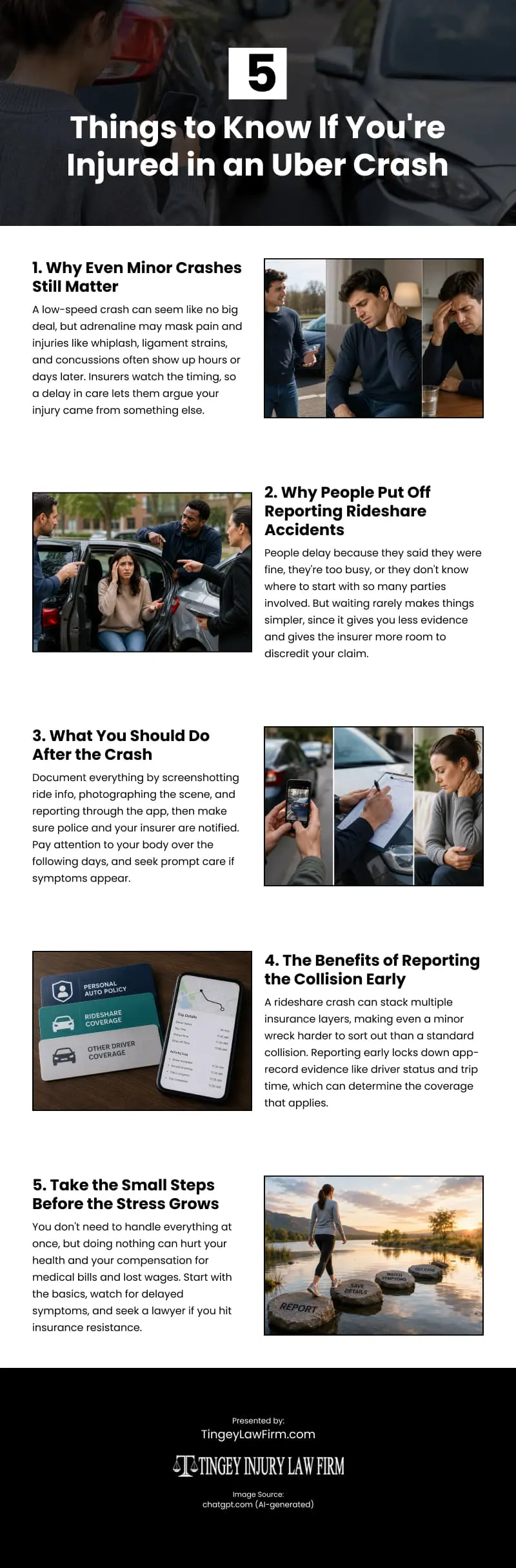
Infographic
After a Las Vegas Uber ride ends in a collision, the shock can overshadow warning signs; even minor crashes can lead to delayed injuries like whiplash or concussions that surface hours or days later. Find out five things to know if you’re injured in an Uber crash in this infographic.