It’s hard to think clearly in the moments after a car accident. You’re likely feeling shaky, dazed, shocked, and confused. And when you start thinking through the consequences, you feel completely overwhelmed. How will you get to work without a car? How will this affect your finances? How will this change your insurance rates?
You know you need to exchange insurance information and wait for the police report. You know you need to call your own insurance company. But beyond that, you may want to go home and crawl into bed—especially if you don’t seem to have any serious physical injuries.
But skipping or delaying medical care after a collision—even when your body feels fine—can have serious consequences for both your health and any potential insurance claims. We asked our Las Vegas car accident attorneys to share reasons why getting medical care should be your top priority after a wreck. Here are their top five.

(freepik/Freepik)
1. Your Adrenaline Could Be Masking Your Pain
Maybe you’ve heard of people doing superhuman things in emotionally-charged moments, like lifting a car off an injured person. That’s adrenaline talking.
Adrenaline is a hormone produced by your body to help you react to stress or danger. It helps kick off a natural fight-or-flight response that can temporarily suppress pain signals and create a false sense of well-being.
One of the most dangerous misconceptions about car accidents is that you’ll know right away if you’re injured, but adrenaline can mask your pain, making you feel fine in the moment. The trouble is that adrenaline won’t last forever, and you could be left with significant injuries that get worse the longer you wait.
2. Some Injuries Don’t Show Up Right Away
Some Injuries, like whiplash, concussions, internal bleeding, and soft tissue damage, may not present obvious symptoms immediately. You might feel normal at the accident scene, only to wake up the next morning feeling light-headed or with terrible neck or head pain. By then, the injury may have worsened, and the delayed treatment could complicate your recovery.
If your regular doctor can’t accommodate you right away, try an urgent care center. Tell your doctor about the car accident and ask them to examine you for potential injuries. It’s always better to be safe than sorry.
3. Some Injuries Worsen Without Prompt Treatment
Certain types of injuries can deteriorate rapidly without proper medical intervention. What starts as minor discomfort can develop into chronic pain or permanent disability if left untreated. Whiplash, for example, may seem like a minor neck strain initially, but without proper treatment, it can lead to long-term pain, reduced mobility, and ongoing complications.
Concussions and other traumatic brain injuries require immediate evaluation and careful monitoring. Even a “mild” concussion can have serious long-term effects on your cognitive function, memory, and emotional well-being if not properly managed. Early intervention gives you the best chance of a full recovery and helps prevent secondary complications.
Soft tissue injuries, herniated discs, and spinal damage also benefit greatly from early treatment. Physical therapy, medication, and other interventions often have the biggest impact when you start them immediately. Delaying care not only prolongs your suffering but may also leave you needing more invasive treatments down the road, such as surgery or long-term pain management.
4. The Psychological Impact Matters Too
Car accidents aren’t just physically traumatic; they can take a significant toll on your mental health. Post-traumatic stress disorder (PTSD), anxiety, and depression are common after serious collisions. Many people experience fear of driving, flashbacks, or sleep disturbances following an accident.
Addressing these psychological symptoms early is just as important as treating physical injuries. Mental health professionals can provide counseling, therapy, and other interventions to help you process the trauma and develop healthy coping mechanisms. Ignoring these symptoms won’t make them go away; in fact, they often get worse over time if you don’t have the proper support.
5. Early Documentation Supports Your Side of the Story
Beyond the health implications, seeking immediate medical care creates an essential paper trail that connects your injuries directly to the accident. Insurance companies and legal proceedings rely heavily on medical documentation, and any delay in treatment can be used against you.
If you wait several days or weeks to see a doctor, insurance adjusters may argue that your injuries weren’t serious. Or they might try to say your injuries were caused by a prior accident or an unrelated health issue. This can result in denied claims or significantly reduced compensation for your medical expenses, lost wages, and pain and suffering.
Immediate medical records establish a clear timeline that links your injuries to the accident. These documents become crucial evidence if you need to pursue legal action. Emergency room visits, diagnostic tests, and physician notes all serve as proof that you took your injuries seriously and acted responsibly in the aftermath of the crash.
Tips for Maximizing Medical Care After an Accident
- If the accident is serious or you’re experiencing any pain or unusual symptoms, call 911 immediately. Paramedics can provide on-site evaluation and transport you to the emergency room if necessary.
- Even if you decline ambulance transport, visit an urgent care facility or your primary care physician within 24 hours of the accident. Explain that you were in a car accident and describe any symptoms you’re experiencing, no matter how minor they seem.
- Be honest and thorough when describing your symptoms to medical professionals. Don’t downplay your pain or discomfort. Medical providers need accurate information to diagnose and treat you effectively.
- If you need care beyond your initial visit, look for a “car accident injury lawyer near me.” A good attorney can direct you to the best medical specialists who can not only help you recover but also document your case in a way that supports your legal rights.
- Get all the tests your doctor recommends. Let’s say your provider tells you to get an MRI, but you shrug it off because you are worried about the cost or the time requirement. Now, you have missed your window to capture medical evidence that can support your legal case. Thorough tests and imaging lead to better support for any potential legal cases related to your accident.
- Keep copies of all medical records, bills, and receipts related to your accident injuries. These documents provide critical support for insurance claims and any potential legal proceedings.
- Follow your doctor’s treatment plan. Attend all follow-up appointments, complete prescribed physical therapy, and take medications as directed. When you don’t comply, you not only delay your own recovery but you signal to insurance companies that your injuries aren’t as bad as you claimed.
Your Health Can’t Wait
Your health is too important to gamble with. The temporary inconvenience of a medical evaluation is nothing compared to the potential consequences of undiagnosed injuries. Whether you feel fine or you’re in obvious pain, getting checked out by a medical professional after a car accident is always the right decision.
Video

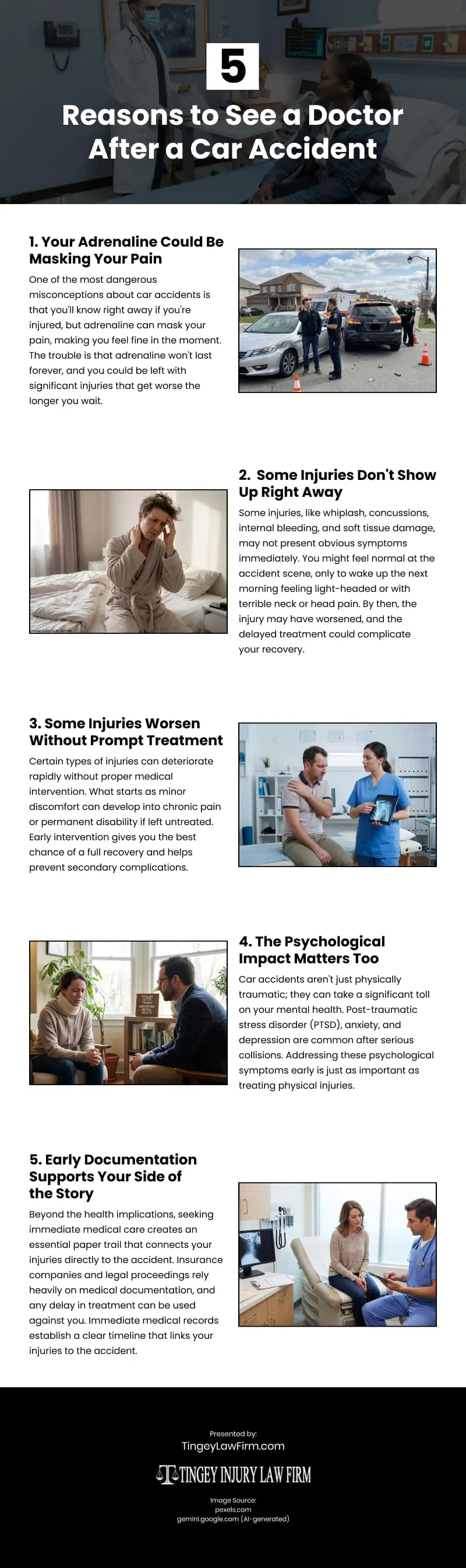
Infographic
After a car accident, it’s normal to feel shaken, overwhelmed, and uncertain about what to do next. However, seeking medical care immediately should be your top priority, even if you think you are unharmed. This infographic highlights important reasons to see a doctor after a car accident.